
Home Improvement, Yard Work & Eye Injuries: Protecting Your Eyes at Home
Medically reviewed by Dr. Sarah Hung, OD
October is Eye Injury Prevention Month, and here's the statistic that surprises everyone: the most common place for an eye injury isn't a job site or a ball field — it's home. Nearly half of all eye injuries happen during everyday activities: mowing the lawn, trimming trees, hammering, drilling, mixing cleaning products.
With fall cleanup season underway from Bridgeland to Firethorne to Katy Lakes, the weed trimmers and pressure washers are coming out. Let's make sure your eyes survive the to-do list.
The Usual Suspects: How Home Eye Injuries Happen
The direct answer: most home eye injuries come from flying debris (yard equipment, power tools, hammering), chemical splashes (cleaners, pool chemicals, fertilizers), and impact accidents — and the overwhelming majority are preventable with proper protective eyewear.
1. Yard Work Projectiles
What it is: Mowers, edgers, and string trimmers launch rocks, mulch, and wire at remarkable speeds.
Why it matters: A pebble at trimmer speed can cause a corneal abrasion, a bleed inside the eye, or worse. Bystanders get hit too — keep kids well clear.
2. DIY & Power Tool Debris
What it is: Drilling, sawing, grinding, and hammering metal-on-metal all shed high-velocity fragments.
Why it matters: Metal slivers can penetrate the eye with barely any initial pain — one of the sneakiest serious injuries we see.
3. Chemical Splashes
What it is: Household cleaners (never mix bleach and ammonia), drain openers, pool chlorine, fertilizers.
Why it matters: Alkaline chemicals in particular can burn the cornea within seconds. This is a true rinse-first, call-second emergency.
The Fix Costs Less Than the Injury: Real Safety Eyewear
Regular glasses are not safety glasses — standard lenses can shatter on impact, adding glass to the injury. What works:
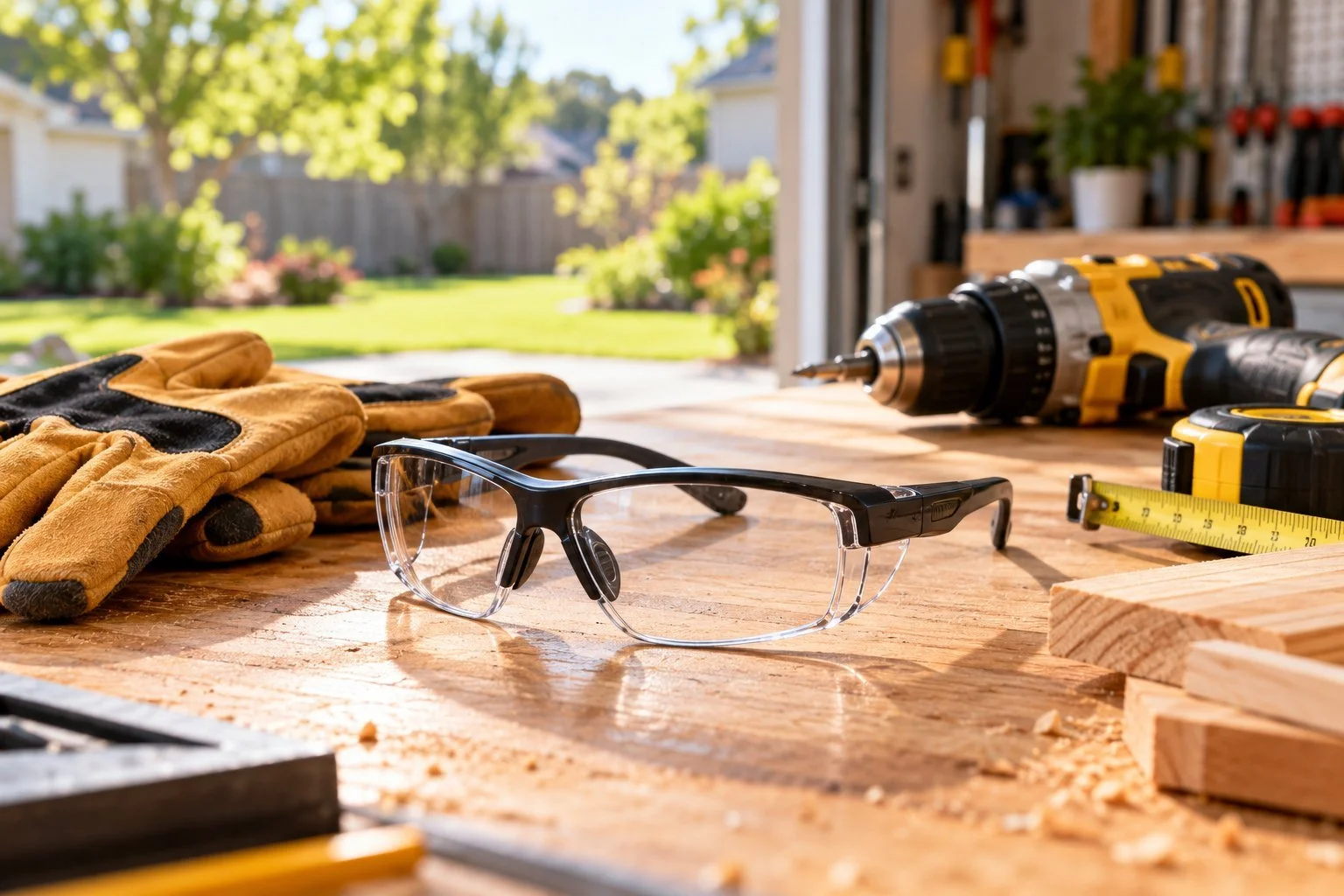
Prescription safety glasses: At our optical, we build ANSI-rated safety frames from Wiley X, Guardian, and more — with your full prescription in impact-resistant polycarbonate or Trivex lenses. See clearly and stay protected, no goggles-over-glasses juggling.
Wraparound and gasketed styles: For grinding, trimming, and chemical work, side protection matters as much as the lens.
For non-glasses wearers: Keep ANSI Z87-marked (impact-rated) safety glasses in the garage — and actually put them on for the "quick 30-second job." That's when most injuries happen.
Bonus for outdoor projects: many Wiley X styles take polarized tints, so your safety pair doubles as sunglasses for the driveway, the deck build, and the lake.
If Something Gets in (or Splashes) Your Eye: Do's and Don'ts
Chemical splash: Rinse immediately with clean water for 15+ minutes, then call us. Don't wait to "see if it improves."
Small debris (dust, eyelash): Blink and flush with water or saline. Don't rub — rubbing turns floating debris into a scratch.
Something embedded or a penetrating injury: Do not remove it, do not rinse, do not apply pressure. Shield the eye and get emergency care immediately.
Sudden flashes, floaters, or a curtain over vision after a blow to the eye/head: Same-day call — these can signal retinal damage. (Our retinal exam post explains why the retina can't feel pain — and our eye emergencies guide covers the full when-to-worry list.)
When in doubt, call us at (281) 626-9885 — we'd always rather tell you it's nothing.
FAQs: Eye Safety at Home
Are regular eyeglasses enough protection for yard work? No. Standard lenses and frames aren't impact-rated and can shatter. Use ANSI-rated safety glasses — available with your full prescription.
Can I get safety glasses in my prescription? Yes. We build prescription safety eyewear from brands like Wiley X and Guardian with impact-resistant lenses, including bifocal and progressive options.
What should I do first for a chemical splash in the eye? Rinse immediately with clean water for at least 15 minutes, remove contact lenses if present, then call an eye doctor. Speed of rinsing matters more than anything else.
Do safety glasses qualify for FSA/HSA funds? Prescription safety eyewear is generally FSA/HSA eligible. Check our Insurances page or ask us to verify your benefits.
Finish the Project With Both Eyes
Whether you're pressure-washing in Bridgeland, building a deck in Firethorne, or taming the flowerbeds in Katy Lakes, one pair of real safety glasses makes every project on the list safer. Come get fitted before the next weekend warrior session.
Protect your most important tools. Schedule online or call or text us: (281) 626-9885