
Medically reviewed by Dr. Sarah Hung, OD
November is Diabetes Awareness Month, and here's a statistic that catches most of our patients in Elyson, Katy Lakes, and Towne Lake off guard: roughly 1 in 3 Texas adults has prediabetes — and the large majority don't know it. No symptoms, no diagnosis, nothing on the calendar. Except, sometimes, something quietly showing up in the back of the eye.
Can an Eye Exam Really Detect Prediabetes?
The direct answer: yes — subtle changes in the retina's blood vessels can appear before a diabetes diagnosis is made, which is why a comprehensive eye exam sometimes catches early metabolic changes before a primary care visit does.
The retina is the only place in the body where blood vessels can be directly visualized without surgery. Elevated blood sugar affects small blood vessels years before symptoms appear elsewhere, and the retina often shows it first.
What We're Looking For
1. Microaneurysms
What it is: Tiny bulges in the retina's smallest blood vessels, an early sign of vessel stress from elevated blood sugar.
Why it matters: These can appear before a formal diabetes diagnosis, particularly in patients with prediabetes or undiagnosed early diabetes.
2. Blood Vessel Changes
What it is: Subtle narrowing, leakage, or irregular patterns in retinal vessels.
Why it matters: These changes correlate with overall vascular health — a preview of what's happening throughout the body, not just the eyes.
3. Fluctuating Prescription
What it is: Blood sugar swings can temporarily change the shape of the eye's lens, causing blurry vision that comes and goes.
Why it matters: Patients sometimes come in for "my glasses stopped working" and leave with a referral to their physician for bloodwork.
How We Screen for This
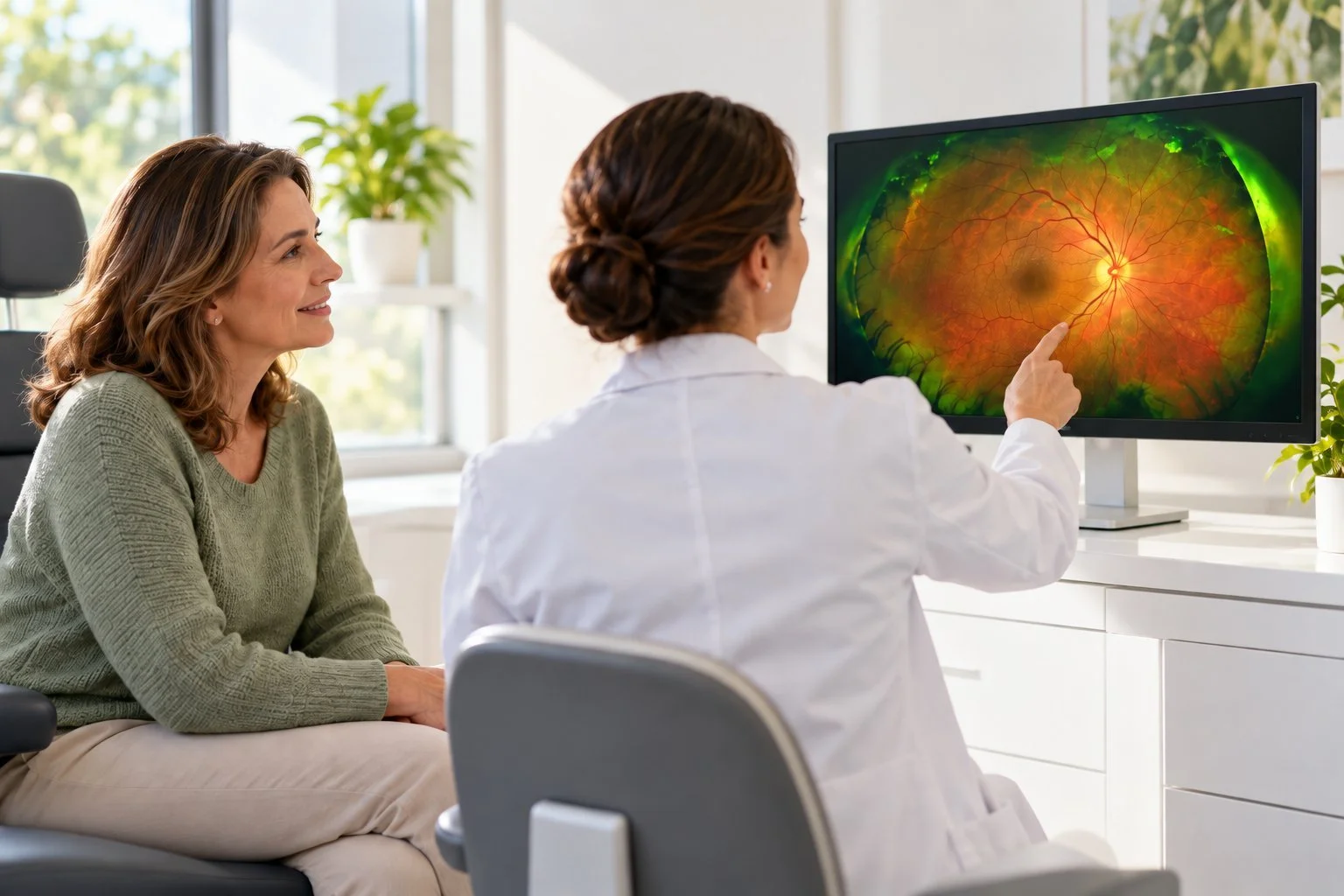
Our Optomap retinal imaging captures a wide, detailed view of the retina in seconds — no dilation drops required for most patients — giving us a clear look at the vessels these changes affect. It's part of a comprehensive eye exam and pairs with the deeper structural imaging we described in our retinal exam post.
Who Should Prioritize This Screening
Anyone with a family history of diabetes
Anyone told they're "borderline" or "prediabetic" at a physical
Anyone experiencing unexplained fluctuations in vision clarity
Anyone overdue for their annual comprehensive exam — this is one more reason not to skip it
If you're already managing diagnosed diabetes, our diabetic eye exam post covers the more frequent monitoring schedule that condition requires.
This Isn't About Alarm — It's About Early Action
Finding these changes early doesn't mean something is wrong right now. It means you and your physician get a head start — often years before symptoms would otherwise prompt a diagnosis. Katy's growth has brought a lot of new neighbors managing exactly this kind of borderline metabolic risk; an eye exam is a low-effort way to stay ahead of it.
FAQs: Prediabetes and Eye Health
Can an eye doctor diagnose diabetes? No — only bloodwork through a physician can diagnose diabetes or prediabetes. However, an eye exam can reveal retinal changes that prompt a referral for that testing.
Do I need dilation for this type of screening? Optomap retinal imaging typically doesn't require dilation, making the screening faster and more comfortable for most patients.
How often should someone with prediabetes get an eye exam? Annually is standard, though your physician or eye doctor may recommend more frequent monitoring depending on your overall risk factors.
Is blurry vision always related to blood sugar? No — blurry vision has many causes. But if it comes and goes unpredictably, especially alongside increased thirst or fatigue, it's worth mentioning to both your eye doctor and physician.
Give Your Eyes (and the Rest of You) a Head Start
Serving Elyson, Katy Lakes, Towne Lake, and the greater Katy area, we're glad to be one more set of eyes — literally — looking out for your long-term health.
Schedule your comprehensive exam. Book online or call or text us: (281) 626-9885